Blog
The Golden Rule: Matching Your Belt with Your Shoes

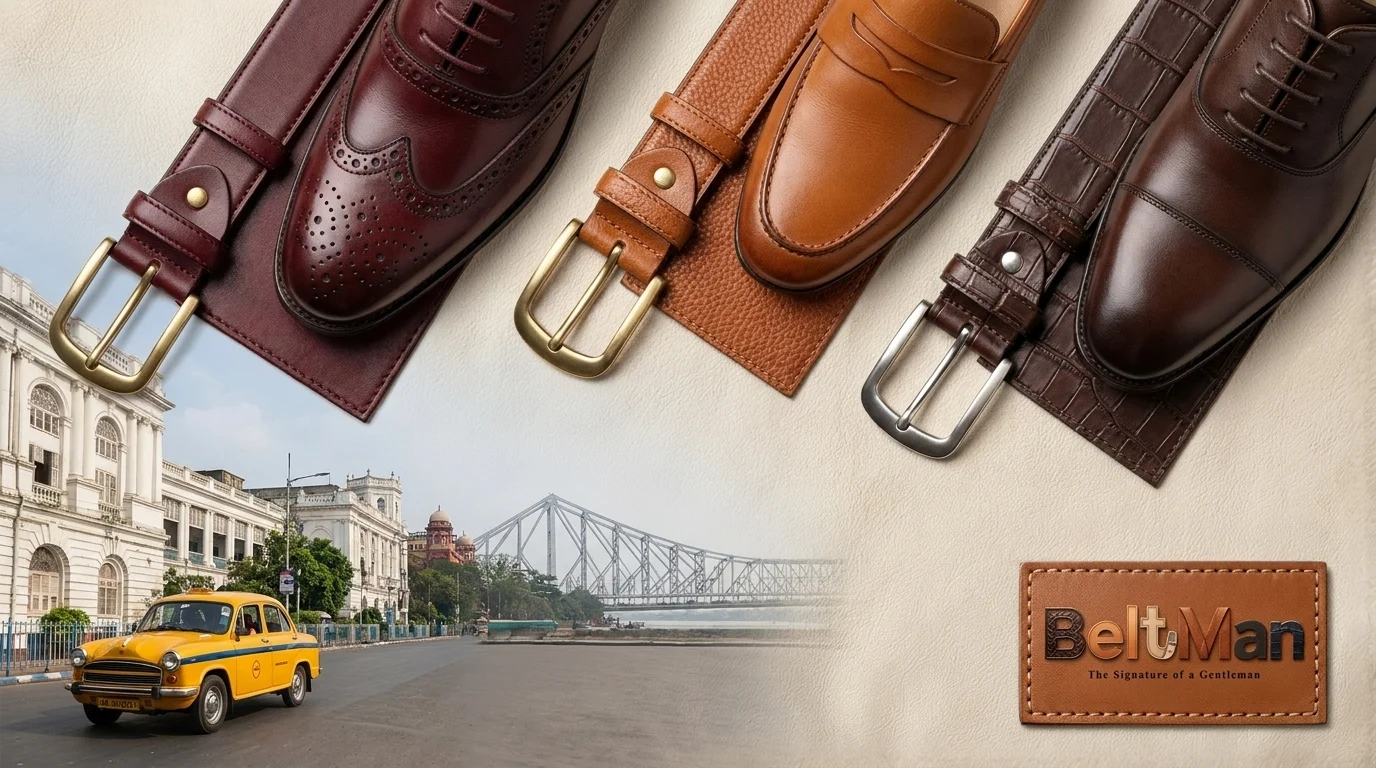
The rule itself takes one sentence to state. Executing it well — across every shoe color and finish you actually own, not just the textbook black-and-brown examples — takes a bit more thought.
Table of Contents
- The Golden Rule, Stated Plainly
- Beyond Black and Brown — Matching Other Shoe Colors
- The Rule Most Guides Skip — Match the Finish, Not Just the Color
- Does the Rule Apply to Sneakers?
- Width and Formality
- Buckle Hardware, Briefly
- When It's Genuinely OK to Break the Rule
- How Many Belts Do You Actually Need?
- Frequently Asked Questions
The Golden Rule, Stated Plainly
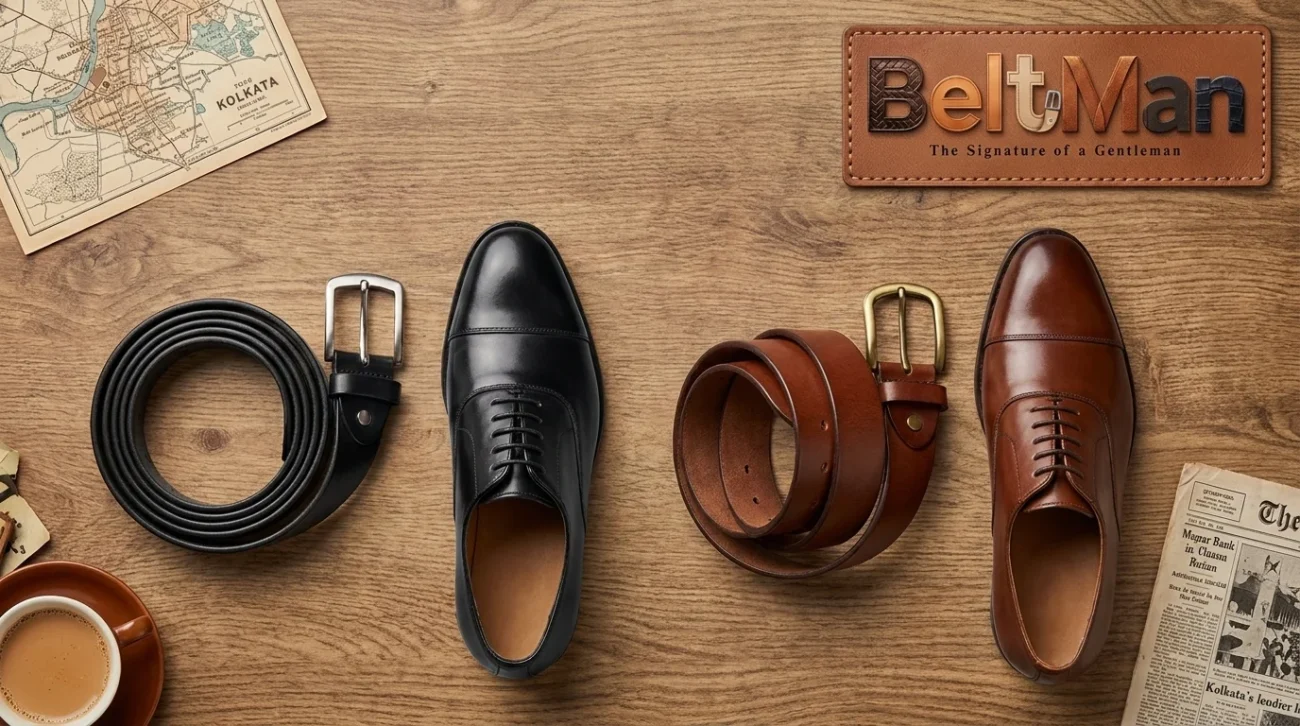
Match the color of your belt to the color of your shoes — and match the family, not necessarily the exact shade.
Black shoes get a black belt, full stop, no real exceptions in anything resembling formal wear — there's no version of this rule that softens once you're wearing a suit. Brown shoes get a brown belt, though here you have genuine room to work with: a tan belt with cognac shoes, or a dark espresso belt with chocolate wingtips, both work fine, because they sit in the same warm color family even without being an identical shade side by side. (→ full breakdown of the black-or-brown decision itself: Black vs Brown: Which Belt Do You Actually Need First?) What follows here goes beyond that core rule, into the colors, finishes, and everyday scenarios most guides skip past entirely.
Beyond Black and Brown — Matching Other Shoe Colors
Most wardrobes eventually include a shoe color that isn't simply black or brown, and the underlying matching logic still holds — it just needs translating to a color that most guides skip past entirely.
Beyond black and brown
Oxblood or cordovan: these deep red-browns are distinct enough from ordinary brown that they genuinely deserve their own belt, not a regular brown one pulled from the closet as a stand-in. An oxblood belt with oxblood shoes reads as considered and deliberate; a plain brown belt with oxblood shoes reads as slightly off, since the red undertone running through the shoes has nothing in the belt to answer to it.
Tan or cognac: lighter, warmer browns pair best with a belt in the same lighter family rather than a dark chocolate or espresso belt, which will look mismatched despite technically qualifying as "brown" on a color chart. Keep light with light, dark with dark, within the broader brown spectrum, rather than assuming any two browns automatically work together.
Navy: genuinely rare in belts, but when navy shoes appear in a wardrobe, a black belt is the safer, more common substitute, since dedicated navy leather goods are uncommon enough that most people don't own one, and black reads as a reasonable, unobtrusive neutral stand-in for it.
Gray: gray shoes, similarly uncommon, pair better with black, gray, or dark navy belts than with anything from the brown family — gray sits on the cool side of the color wheel, the same side black lives on, while brown is fundamentally a warm tone that won't sit comfortably alongside it.
The Rule Most Guides Skip — Match the Finish, Not Just the Color
Two items can be the exact same color and still look wrong together, if one is glossy and the other is completely flat.
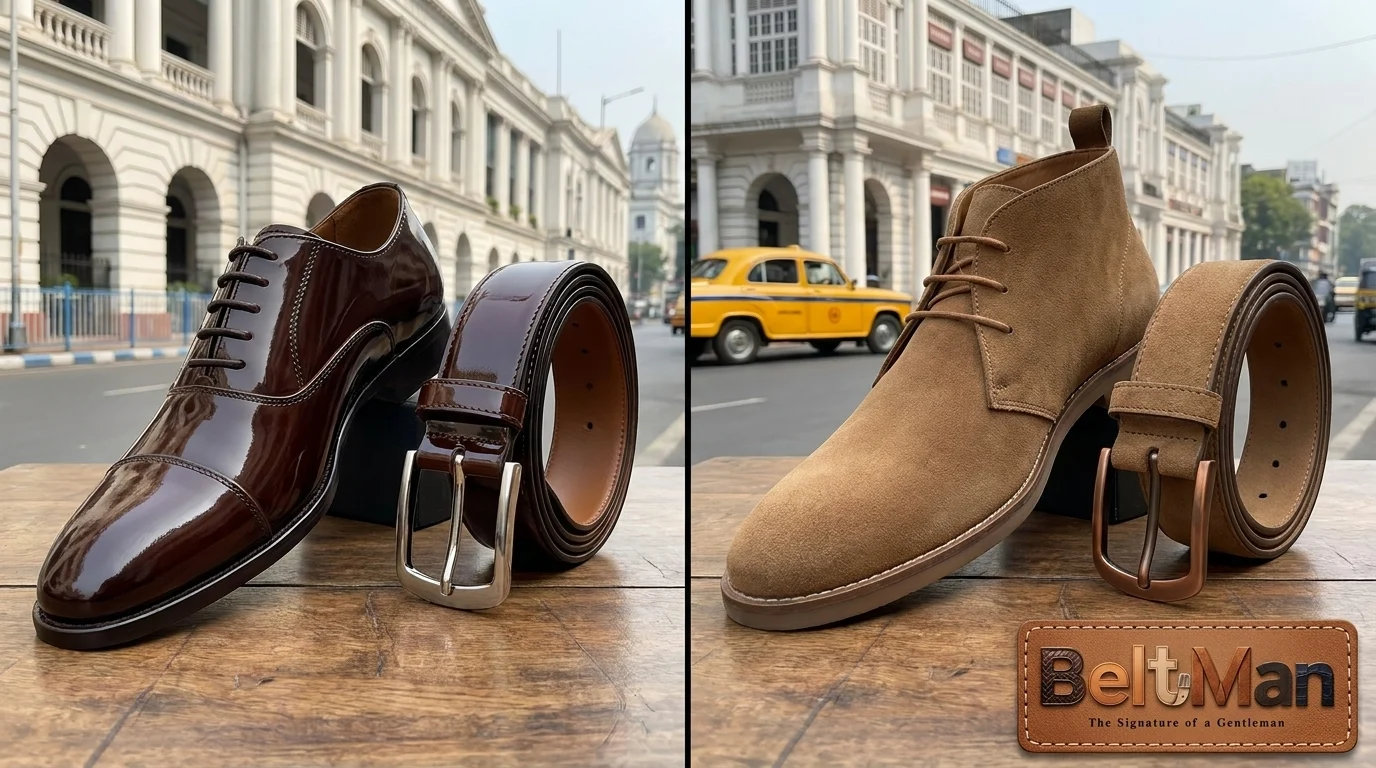
Match the finish, not just the color
This is the detail that separates a genuinely well-put-together outfit from one that's merely color-coordinated on paper. High-shine, polished leather — patent leather shoes, or highly polished dress calfskin — calls for a belt with a similarly glossy, lacquered finish to match. A matte, natural-grain belt sitting next to patent shoes looks like an oversight, even when the underlying color is technically correct. Semi-gloss or burnished full-grain leather, the finish most quality dress shoes and loafers actually have day to day, pairs well with a similarly finished belt — polished but not mirror-shiny, which describes most well-made leather belts, Beltman's included. Suede is its own category entirely and shouldn't be treated as just another color decision: suede shoes pair best with either a genuine suede belt for a fully tonal look, or a matte, non-glossy smooth-leather belt if you'd rather have some contrast without an outright clash. Pairing suede shoes with a high-shine, patent-style belt is the finish equivalent of pairing black shoes with a brown belt — technically two leather items in the same general color, but functionally mismatched the moment someone actually looks closely.
Does the Rule Apply to Sneakers?
Not in the same way, and trying to force it usually looks more contrived than simply ignoring it would.
Sneakers rarely come in a shade that maps cleanly onto belt leather the way a dress shoe does, and nobody genuinely expects a white-sneaker outfit to include a matching white leather belt. The practical answer: with jeans and sneakers, a standard brown or black leather belt works fine on its own merits, chosen based on the overall tone of the rest of the outfit rather than the sneakers specifically. If the sneakers happen to have a leather panel in a clear, matchable color — a tan leather sneaker with a visible leather heel tab, for instance — treating that panel like you would a regular shoe is a reasonable, considered move. Otherwise, this is genuinely the one context where the golden rule steps back and general outfit coordination takes over instead, without it counting as breaking any real rule.
Width and Formality
A correctly colored, correctly finished belt can still look wrong if the width doesn't suit the occasion or the shoe it's paired with — narrower belts (roughly 1 to 1.25 inches) read as dressier and suit formal shoes and suits, while wider belts (1.5 inches and up) suit jeans and casual footwear better, since a slim dress belt on wide casual loops looks visibly out of place regardless of color. (→ full width breakdown: Belt Size Guide — Choosing the Right Belt Width), since this is really a sizing question as much as a matching one, and it's already covered properly there rather than repeated here in less detail.
Buckle Hardware, Briefly
Match your buckle metal to your shoe hardware and watch, where any of them have visible metal — silver or steel together, gold or brass together. (→ the fuller version of this, with jeans-specific detail: Black vs Brown: Which Belt Do You Actually Need First?) It's a real detail, but a secondary one to color and finish, and most shoes don't have prominent metal hardware to coordinate with in the first place.
When It's Genuinely OK to Break the Rule
The golden rule earns its name by being right most of the time — not by being right without any exception whatsoever.
In formal, professional, or conservative settings — interviews, weddings, courtrooms, client meetings — stick to the rule without deviation; this is not the context where a deliberate mismatch reads as intentional style rather than a straightforward oversight someone will notice. In casual or genuinely creative settings, a considered contrast can actually work: a very dark brown belt with black shoes, for instance, in an outfit where everything else is clearly deliberate and put-together. The test that separates a stylish exception from a plain mistake is whether the rest of the outfit supports the contrast as an obvious choice — if the mismatch is the only unusual element in an otherwise coordinated, conventional look, it reads as an error someone will quietly notice; if the whole outfit plays with contrast intentionally throughout, one considered break in the rule reads as confidence instead of carelessness.
How Many Belts Do You Actually Need?
Two well-chosen belts cover more of your shoe collection than most people initially assume when they start counting.
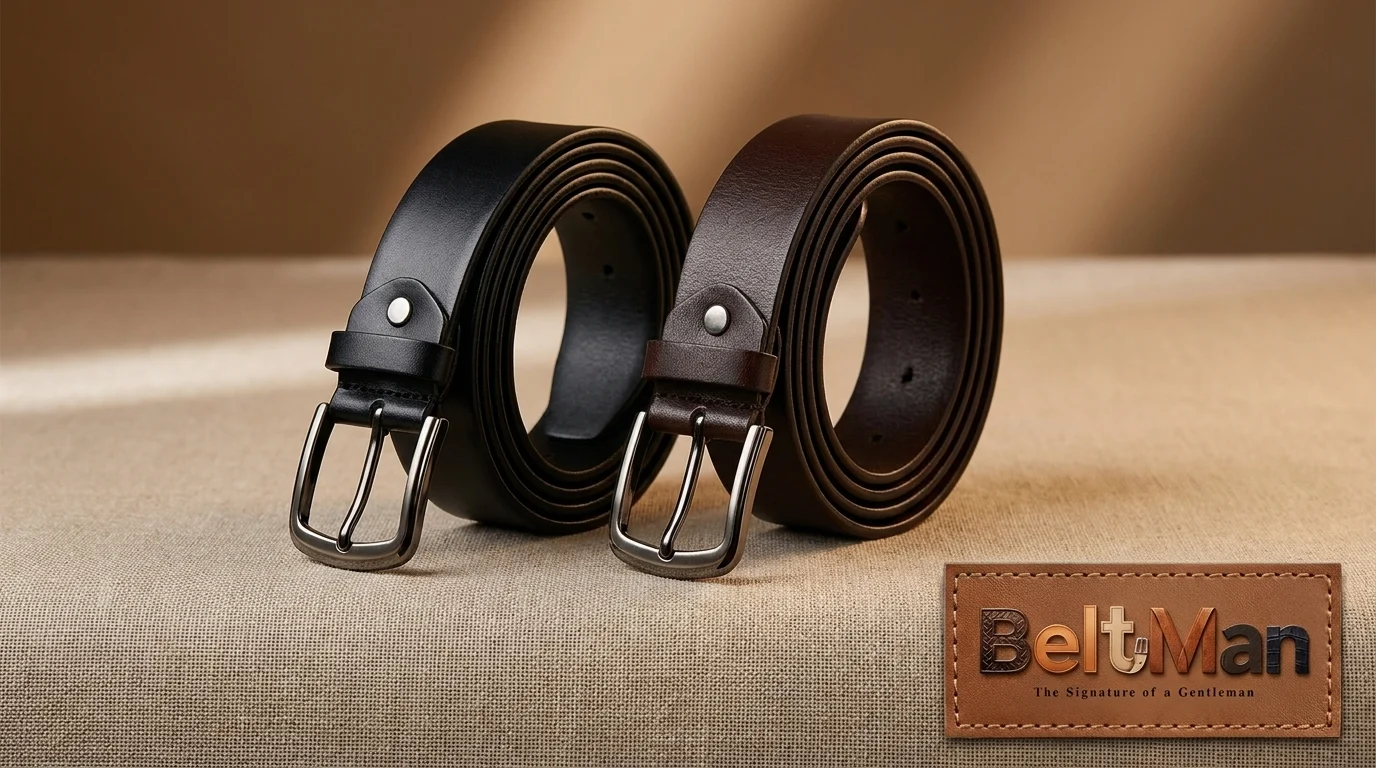
Two belts, most of your wardrobe covered
A black belt and a medium-to-dark brown belt, both in a shade that sits comfortably in the middle of their respective color families rather than at either extreme, will coordinate reasonably well with the large majority of shoes most people actually own — dark brown works "close enough" with everything from tan to espresso, and black works with black, full stop, no real negotiation needed. Add an oxblood belt only once oxblood shoes are already a real, regular part of your rotation, not preemptively on the theory that you might need it someday. This is also where a reversible belt earns its keep twice over — one belt handling both of your most-used colors at once, rather than a drawer slowly filling up with near-duplicate purchases. (→ Men's Leather Belts)
Frequently Asked Questions
Does my belt have to match my shoes exactly?
No — matching the color family is enough in almost every real situation. A tan belt with cognac shoes, or dark espresso with chocolate brown, both work without needing to be an identical shade.
Can I wear a brown belt with black shoes?
Not in formal settings — this remains the one combination worth avoiding consistently, no matter how dark the brown is. In casual, deliberately styled outfits, a very dark brown can occasionally work, but it's a risk rather than a safe everyday default.
What belt goes with oxblood or burgundy shoes?
An oxblood or burgundy belt specifically — plain brown doesn't answer the red undertone in the shoes and tends to look slightly mismatched once you look closely.
Do I need to match my belt to sneakers?
Not really. A standard brown or black leather belt works fine with sneakers, chosen to suit the rest of the outfit rather than the sneakers' specific color or material.
Why do my belt and shoes look mismatched even though the colors are the same?
Check the finish, not just the color — a matte belt next to glossy patent shoes, or a glossy belt next to suede, looks off even when the underlying color is technically correct.
How many belts do I actually need to match most of my shoes?
Two, in most cases: a black belt and a medium-to-dark brown one. Add other colors only once a shoe color is genuinely part of your regular rotation, not in anticipation of a hypothetical future need.
Is it ever acceptable to intentionally mismatch belt and shoe color?
In casual or creative settings, yes, if the rest of the outfit clearly supports it as a deliberate choice rather than being the only mismatched element in an otherwise coordinated look.
Does belt width affect how well it matches my shoes?
Indirectly, yes — a narrow, dressy belt with bulky casual shoes (or the reverse) can look as mismatched as the wrong color, even when the color itself is correct.