Blog
How to Care for Your Leather Belt So It Lasts 10+ Years

The Quick Answer
Clean it with a dry cloth regularly, condition it twice a year, store it hanging or rolled away from sunlight, and rotate between two belts rather than wearing one every single day.
None of this requires special products beyond a basic leather conditioner, and none of it takes more than a few minutes at a time. The belts that fail early almost always fail for the same handful of reasons: left folded in a drawer for months, never conditioned even once, or worn daily for years with no rest at all — not because the leather itself was poor quality to begin with. Fix those four things and a genuine full-grain belt will outlast almost everything else in a wardrobe.
Cleaning Your Belt
A soft, dry cloth handles most of what a belt actually needs, most of the time — cleaning leather is mostly about restraint, not effort.
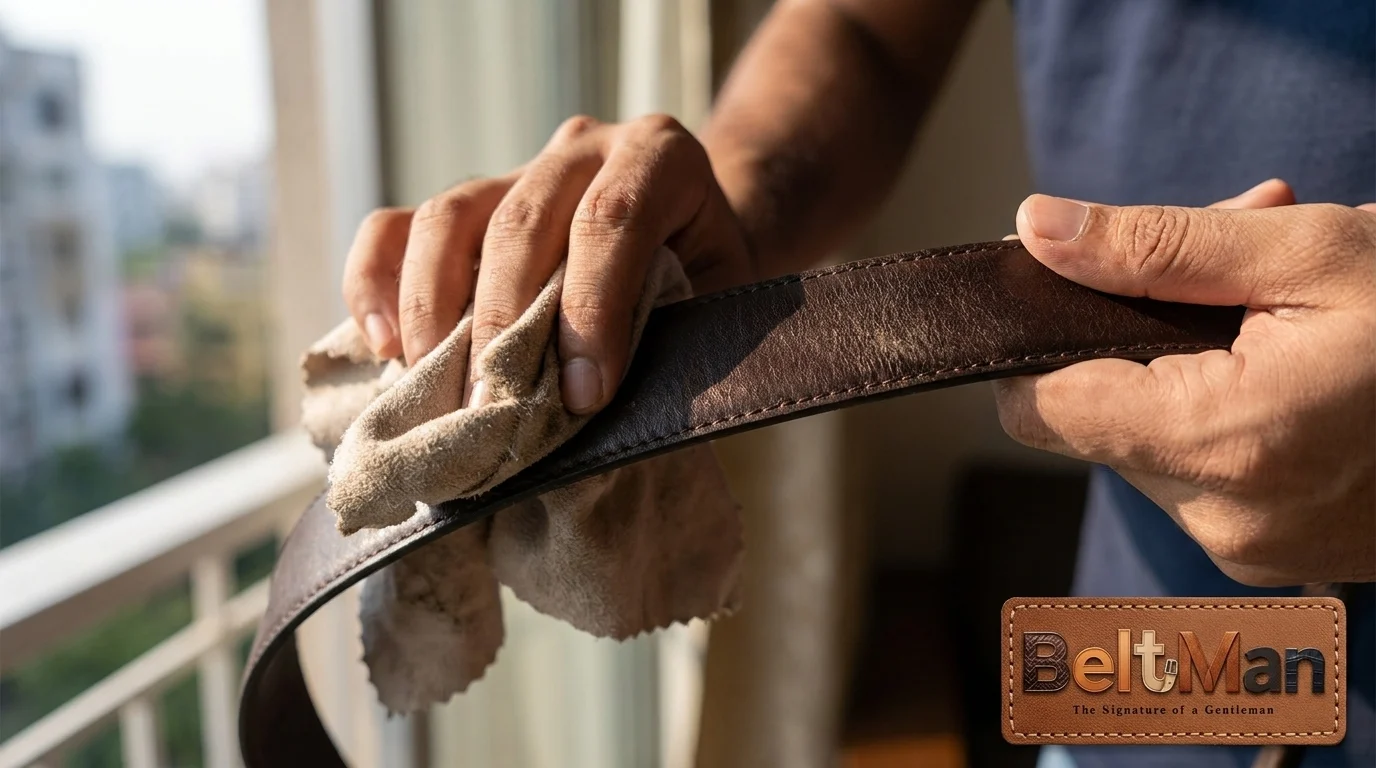
Wipe your belt down with a dry, soft cloth every couple of weeks if you wear it daily — this alone removes the dust, sweat, and body oils that otherwise sit on the surface and gradually dull the leather's natural shine. For an actual mark or stain, dampen a cloth slightly with water and a small amount of mild soap, wipe gently in the direction of the grain, then wipe again with a second clean, damp cloth to remove any soap residue before it dries in. Let it air dry naturally afterward, away from direct heat. Avoid acetone, bleach, alcohol-based cleaners, or anything not specifically made for leather — these strip the natural oils out of the hide and accelerate exactly the cracking you're trying to prevent in the first place.
Conditioning: How Often and How Much
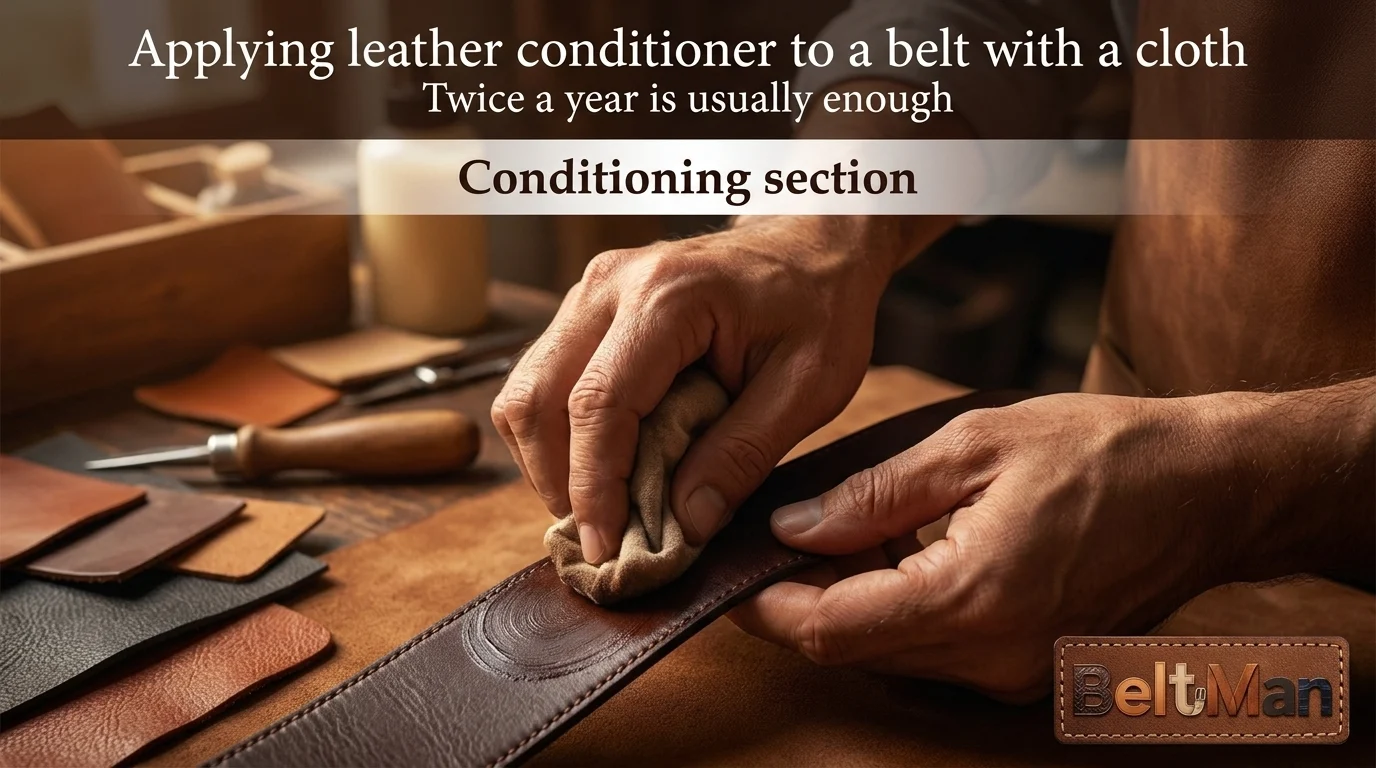
Leather dries out over time the same way skin does, and conditioner is simply how you put back what daily wear and everyday exposure take out.
For a belt in regular use, conditioning roughly twice a year is enough for most people — more often if you live somewhere genuinely dry or dusty, less if the belt only sees occasional wear on weekends. Apply a small amount of leather conditioner with a soft cloth, work it in gently in small circular motions across the whole surface, and let it absorb for a few hours or overnight rather than wiping it straight off. More isn't better here: over-conditioning can leave leather feeling greasy to the touch and can actually soften it more than you'd want for a structured item like a belt that needs to hold its shape. If the leather feels stiff or looks slightly dull before your six months are up, treat that as your actual signal to condition early, rather than sticking rigidly to a calendar date that doesn't reflect how the belt is actually holding up.
Storing It Properly
How a belt spends its time off your waist matters almost as much as how carefully it's treated while you're actually wearing it.
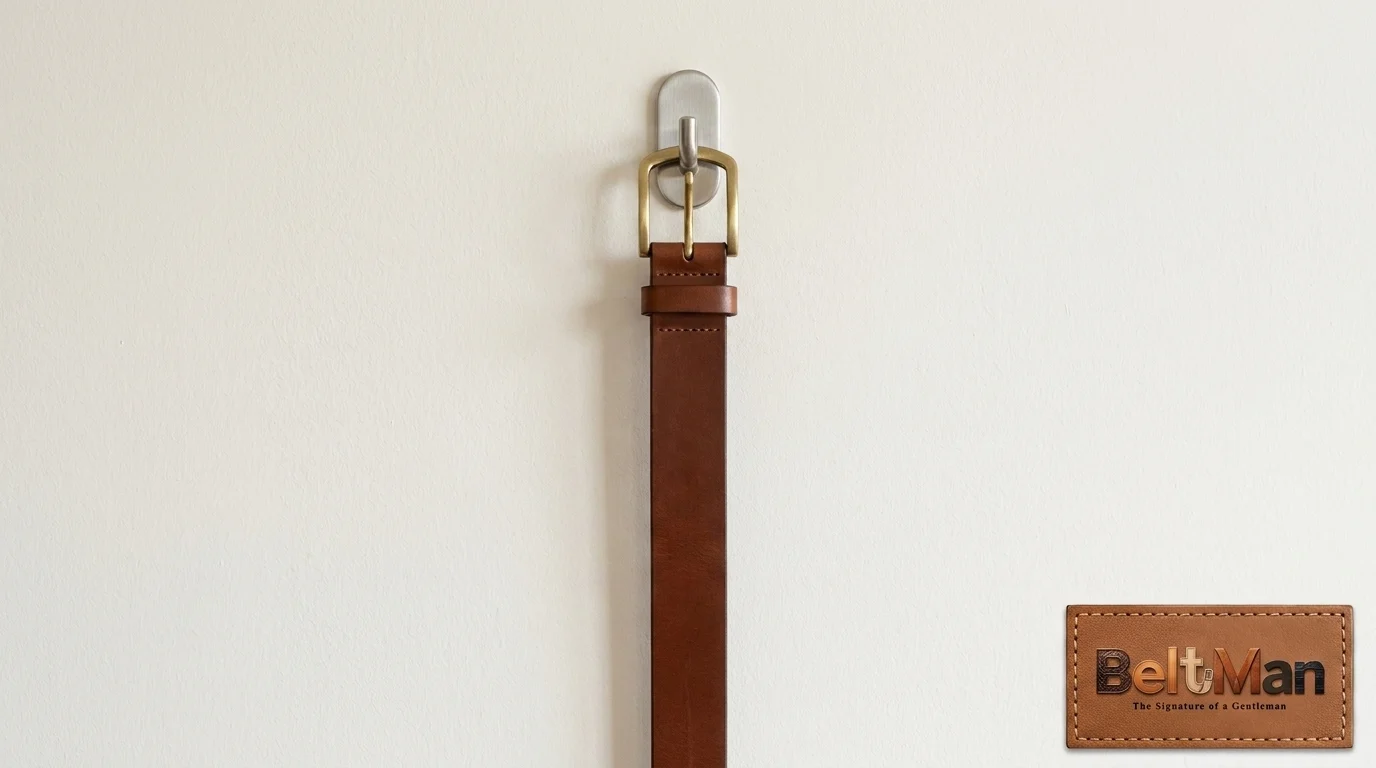
Hang your belt straight on a hook, or roll it loosely with the buckle on the outside if hanging space isn't available — never fold it sharply or leave it scrunched at the bottom of a drawer, since leather holds whatever shape you leave it in for long enough, the same way a crumpled shirt holds its wrinkles. Keep it away from direct sunlight and damp areas alike: UV exposure fades and dries out leather steadily over time, while damp, poorly ventilated storage is the most common cause of the musty smell and occasional mold spotting that shows up on otherwise well-made belts that were simply put away wrong.
Why Rotating Between Two Belts Extends Both Their Lives
A belt that's never worn two days running lasts meaningfully longer than one that's worn every single day without any break at all.
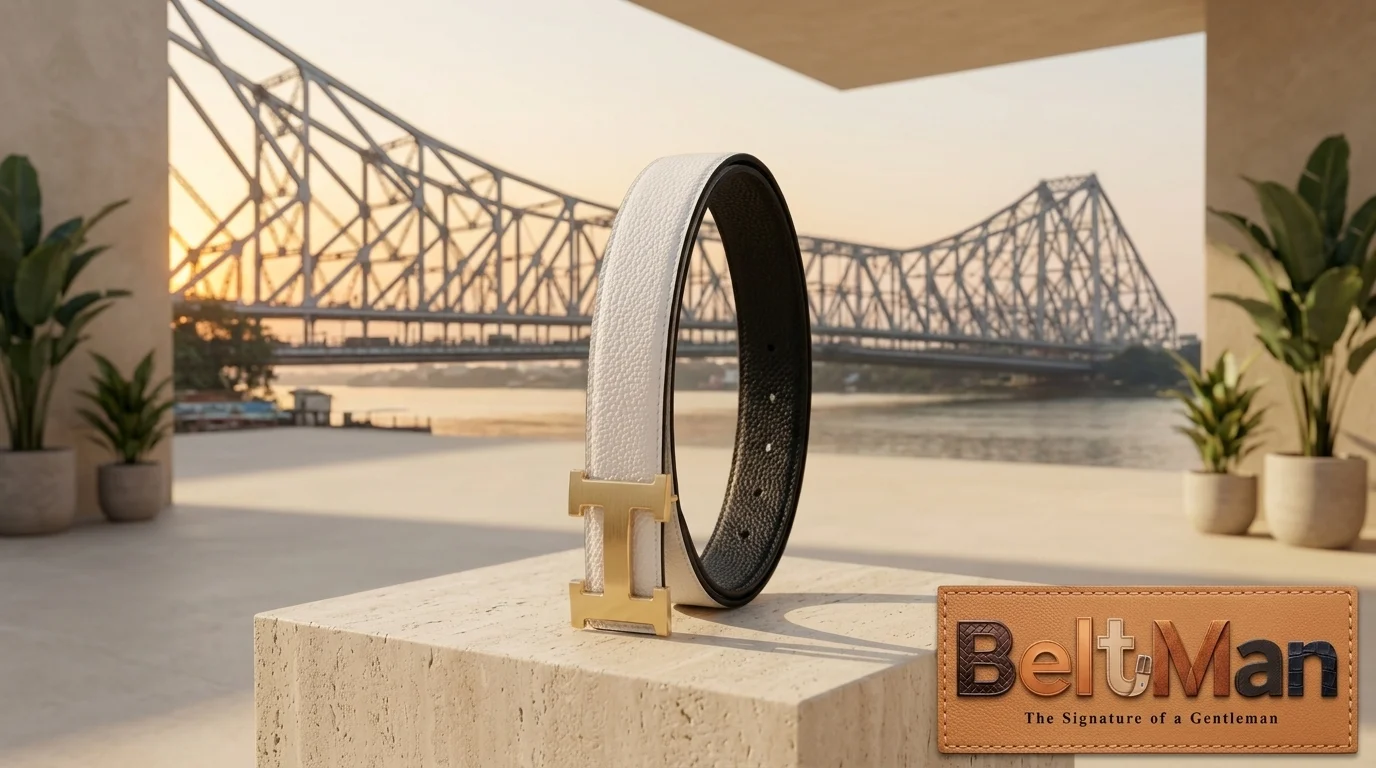
Constant daily use concentrates wear at exactly the same stress points every time — the hole you actually use, and the crease where the buckle sits — without ever giving the leather fibers time to recover their shape in between wears. Alternating between two belts spreads that wear out and genuinely extends the usable life of both, not just one at the expense of the other. This is also where a reversible belt does double duty: black leather on one side, brown on the other, and rotating between the two faces means both sides age into an even patina over time, rather than one side absorbing all the wear while the other stays untouched in a drawer for years. (→ Men's Leather Belts)
Signs Your Belt Needs Attention
Catching these early is usually the difference between a quick, five-minute fix and a belt that's already past saving.
- Fading or patchy discoloration, especially near the holes or edges, usually signals UV exposure or leather that's dried out and needs conditioning sooner rather than later, before it progresses further.
- A stiff, hard texture where the belt used to feel supple and pliable is the clearest early sign it's due for conditioning, well before it progresses to actual visible cracking.
- Surface cracking at stress points — right where the buckle sits, or around the single most-used hole — is a sign of either heavy daily use without any rotation, or leather that's been allowed to dry out for too long without attention.
- A musty smell or visible spotting on the surface points to damp storage conditions specifically, and the real fix is a change in where the belt lives day to day, not just a one-time clean.
What Not to Do
A handful of common habits genuinely do more damage than ordinary daily wear ever does on its own.
- Don't use household cleaners not made for leather — glass cleaner, all-purpose spray, anything with bleach or ammonia will strip natural oils fast and dry the leather out from the inside.
- Don't dry a wet belt near direct heat — a radiator, a car dashboard, or direct sun — since rapid heat-drying causes leather to crack and shrink unevenly rather than dry gently; let it air dry slowly at room temperature instead, even if it takes longer.
- Don't fold or scrunch it for storage — leather holds a crease the way skin holds a mark under pressure, and a sharp fold can become a permanent weak point that eventually splits.
- Don't skip conditioning just because the belt still looks fine on the surface — dryness happens well before it becomes visible to the eye, and by the time cracking actually shows up, some of the damage has already been done and can't be fully reversed.
Why Full-Grain Leather Ages Better Than the Alternative
Everything above works the way it does because of what the leather actually is at a material level, not just because of the routine itself in isolation.
Full-grain leather absorbs conditioner into its fiber structure the same way it absorbs a drop of water — which is exactly the trait that lets it develop a genuine patina and stay supple for years with nothing more than basic, occasional care. PU or bonded leather, by contrast, has a coated or synthetic surface that doesn't absorb conditioner in the same way at all, so no amount of careful routine will make it age the way full-grain does — it's simply a different material responding differently to identical treatment. (→ full breakdown: 5 Ways to Tell Pure Leather from Fake Leather) This is also why the "10+ years" promise in this post's own title is a realistic, honest claim for a genuine full-grain belt specifically, and not one that would hold up for a PU alternative, however well you looked after it in the meantime.
Frequently Asked Questions
How often should I clean my leather belt?
Wipe it down with a dry, soft cloth every 2–3 weeks if worn daily. Address actual stains as they happen with a barely damp cloth and a small amount of mild soap.
How often should I condition a leather belt?
Roughly twice a year for a belt in regular use — more often in dry or dusty climates, less for occasional weekend wear. Stiffness or dullness before then is a sign to condition early rather than waiting.
Can I use regular soap or household cleaner on my belt?
No — stick to a small amount of mild soap, or a leather-specific cleaner. Household cleaners, bleach, and alcohol-based products strip natural oils and accelerate cracking significantly.
Why does my belt smell musty?
Almost always damp or poorly ventilated storage. Move it to a cool, dry spot and the smell typically resolves on its own; persistent mold spotting needs a proper leather cleaning treatment instead.
Should I have more than one belt in rotation?
Yes — alternating between two belts, or wearing both sides of a reversible one, reduces concentrated wear at the same stress points and genuinely extends the life of each.
Will conditioning change the color of my belt?
A small amount usually deepens the color slightly, which is normal and part of how full-grain leather develops its patina over time. Always test a small, inconspicuous area first if you're at all unsure.
Does full-grain leather really need less care than other materials?
It needs the same basic routine as any leather, but it responds to that care by actually improving with age and developing a patina — where PU or bonded leather simply degrades over time regardless of how well you look after it.
Can I speed up the patina process on a new belt?
Not really, and it's not worth trying — patina develops naturally through normal wear and occasional conditioning over months and years, and forcing it with excessive oiling or handling tends to darken leather unevenly rather than genuinely age it.