Blog
How to Choose the Right Belt Size: A 2-Minute Guide

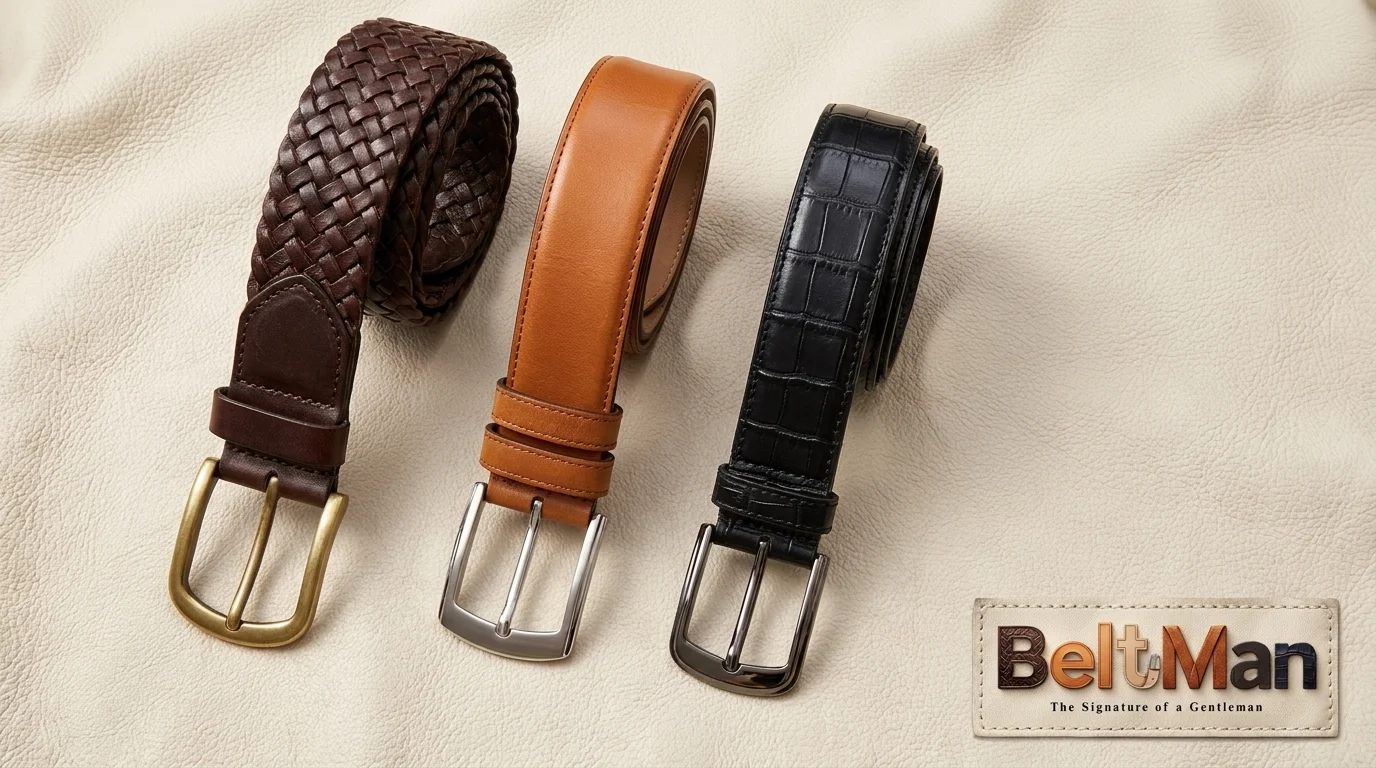
Get this wrong and a great belt still looks off. Here's how to get it right the first time — for men's and women's belts both.
Table of Contents
The Quick Answer
Add 2 inches to your trouser waist size, and that's your belt size.
If you wear a 34-inch waist, order a 36-inch belt. Wearing low-rise trousers or jeans instead of a mid-rise fit? Add 3 to 4 inches instead of 2, since the belt sits lower on your hips and needs more length to reach comfortably around. Don't have a moment to measure anything right now? This single rule gets it right for most people, most of the time, and it's the same starting point every belt brand — Beltman included — actually works from.
For the two minutes it takes to properly confirm it, though, the two methods below remove almost all the guesswork, and are worth doing before you place an order rather than after.
Method 1 — Measure Your Trouser Waist
Measure where the belt actually sits, not your natural waistline.
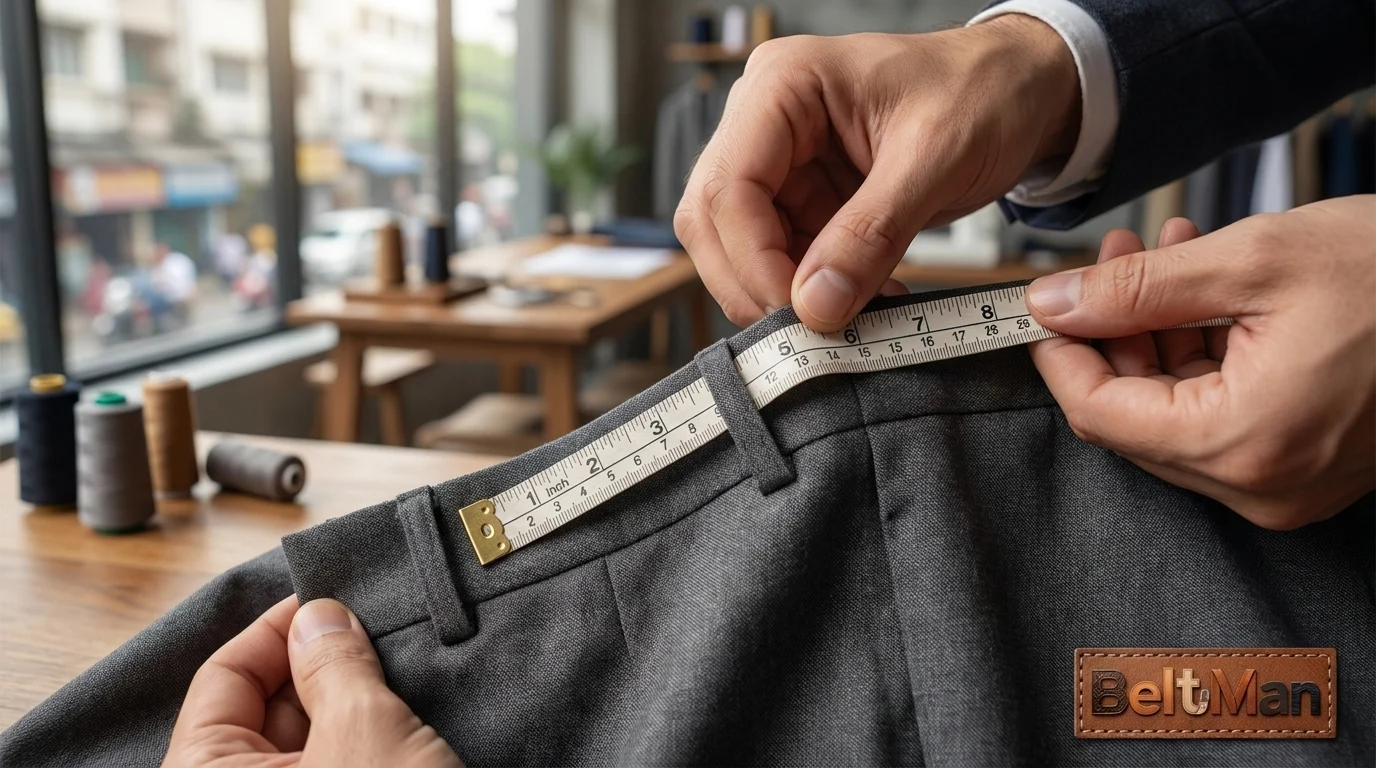
Put on the trousers you'd normally wear a belt with, and thread a soft measuring tape through the belt loops at the height the belt will actually sit — not higher, at your natural waist, if that's not where your trousers ride day to day. Pull the tape snug, without sucking in or pushing your stomach out, and note the measurement to the nearest inch, standing in a normal, relaxed posture. Add 2 inches for a standard mid-rise fit, or 3 to 4 for low-rise trousers or jeans, since those sit noticeably lower and change how much length the belt actually needs. That final number is your belt size — write it down before you forget it.
Method 2 — Measure a Belt You Already Own
The most reliable method of the two, if you have a belt that already fits well.
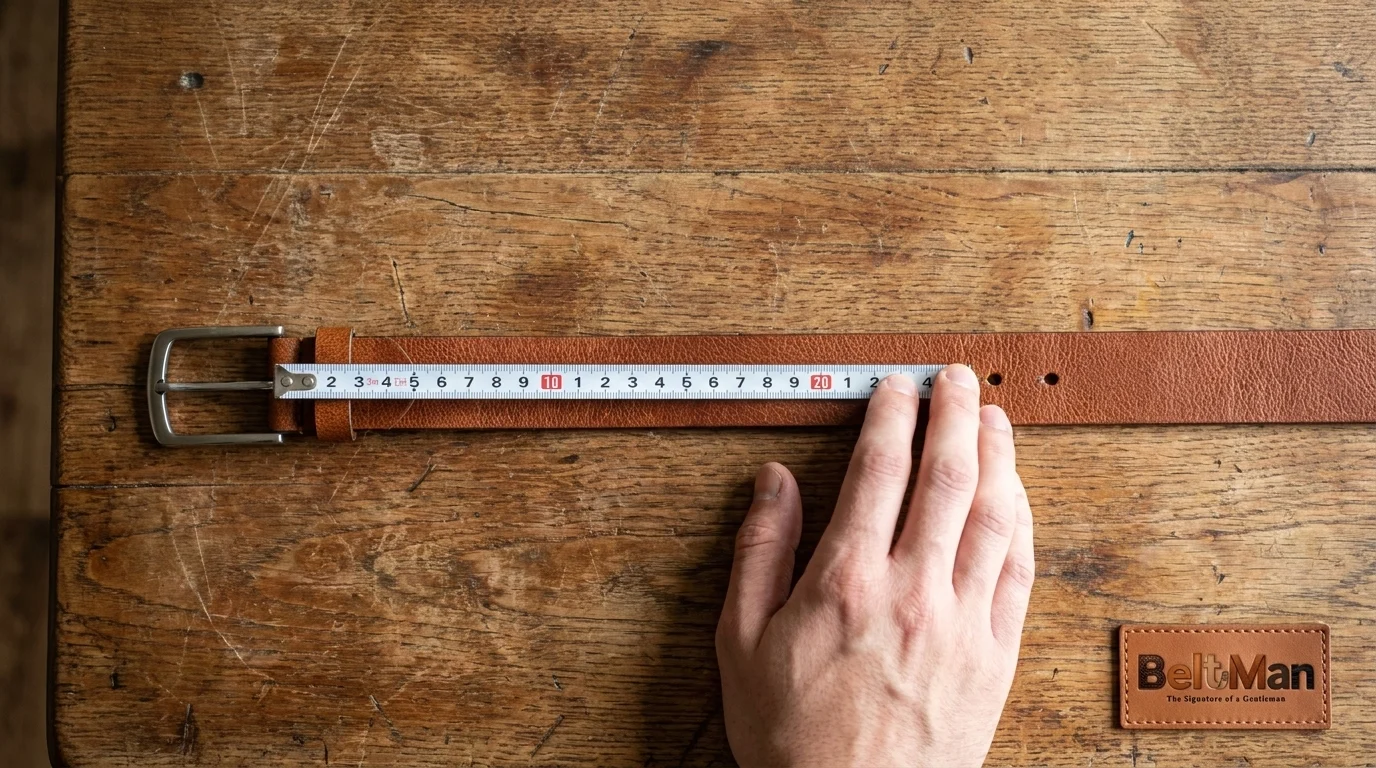
Lay a belt you like the fit of flat on a table, buckle on the left. Measure from the inside edge of the buckle — where the prong actually sits, not the outer tip of the buckle itself — to the hole you use most often, the one that fastens comfortably without being either loose or strained. That distance, in inches, is your size. The most common mistake here is measuring the belt's total end-to-end length instead, which includes several extra inches of leather past the last hole and will throw the number off by a noticeable margin, usually toward ordering something too large. If you don't have a soft tape measure handy, a piece of string or a phone charging cable works just as well — mark where it meets, then measure that length flat against a ruler or a straight edge afterward.
Why Getting This Right Matters
Beltman belts come in a full range of standard sizes — which means the number you just measured is what you should actually order, not a starting point for a custom cut.
Some brands offer to trim a belt to your exact measurement; Beltman doesn't, and most quality belt brands don't either — you're choosing from a fixed range, the same way you would with a pair of trousers. That makes the two minutes spent measuring properly upfront worth more, not less: a size that's off by an inch or two is the difference between wearing your new belt today and arranging an exchange next week. *(→ Returns & Refunds)* covers what to do if you end up between sizes, but getting it right the first time is always the simpler outcome.
Common Sizing Mistakes
Four things that quietly throw off an otherwise correct measurement.
-
Using your jeans size instead of measuring. Jeans sizing varies enough between brands — and is sometimes deliberately generous, a practice often called vanity sizing — that it's an unreliable stand-in for an actual measurement, even when it feels like a reasonable shortcut.
-
Measuring at your natural waist instead of belt height. If your trousers sit below your natural waistline, which is common with most modern cuts, measuring higher up will give you a number that reads smaller than the belt actually needs to be.
-
Ignoring trouser rise. Low-rise and mid-rise trousers put a belt in a genuinely different position on your body, and that difference is usually 1 to 2 inches of belt length — small on paper, but enough to matter once the belt is cut.
-
Ordering too tight. A belt that only just reaches its first hole looks visibly strained and wears out faster at that one stress point, since it's rarely getting a rest at a looser setting. If you're between two sizes on any standard chart, size up rather than down.
Belt Size Reference Chart
For general reference — or for sizing a belt bought anywhere else — here's how standard waist measurements typically map to belt sizes, shown in both inches and centimeters since Indian shoppers often think in one or switch comfortably between both.
| Waist (inches) | Belt Size (inches) | Waist (cm) | Belt Size (cm) |
|---|---|---|---|
| 28–29 | 30–31 | 71–74 | 76–79 |
| 30–31 | 32–33 | 76–79 | 81–84 |
| 32–33 | 34–35 | 81–84 | 86–89 |
| 34–35 | 36–37 | 86–89 | 91–94 |
| 36–37 | 38–39 | 91–94 | 97–99 |
| 38–39 | 40–41 | 97–99 | 102–104 |
| 40–42 | 42–44 | 102–107 | 107–112 |
This chart is a general guide — Beltman's own range may sit slightly differently at the edges, so check the specific size options on the product page for the exact belt you're ordering rather than assuming this table matches it precisely.
Choosing the Right Belt Width
Width matters just as much as length, and it's the part most size guides skip entirely.
Slim (under 1 inch): suits, formal trousers, and most women's belts — a slim profile reads as dressier and sits cleanly under a fitted waistband without adding visual bulk.
Standard (1.25–1.5 inches): the most versatile width available, right for everyday trousers and chinos, and the safest default choice if you're genuinely unsure which way to go.
Wide (1.5 inches and up): jeans and casual wear, especially with wider belt loops — a slim belt threaded through wide loops looks visibly undersized and tends to twist during the day.
The simplest practical rule, and one that rarely fails: match the belt's width to the width of your trouser's belt loops. If the belt is noticeably narrower than the loop it's passing through, it will shift and twist as you move no matter how well the length itself fits.
Sizing a Ladies' Belt
Women's belt sizing gets treated as an afterthought almost everywhere — it shouldn't be.
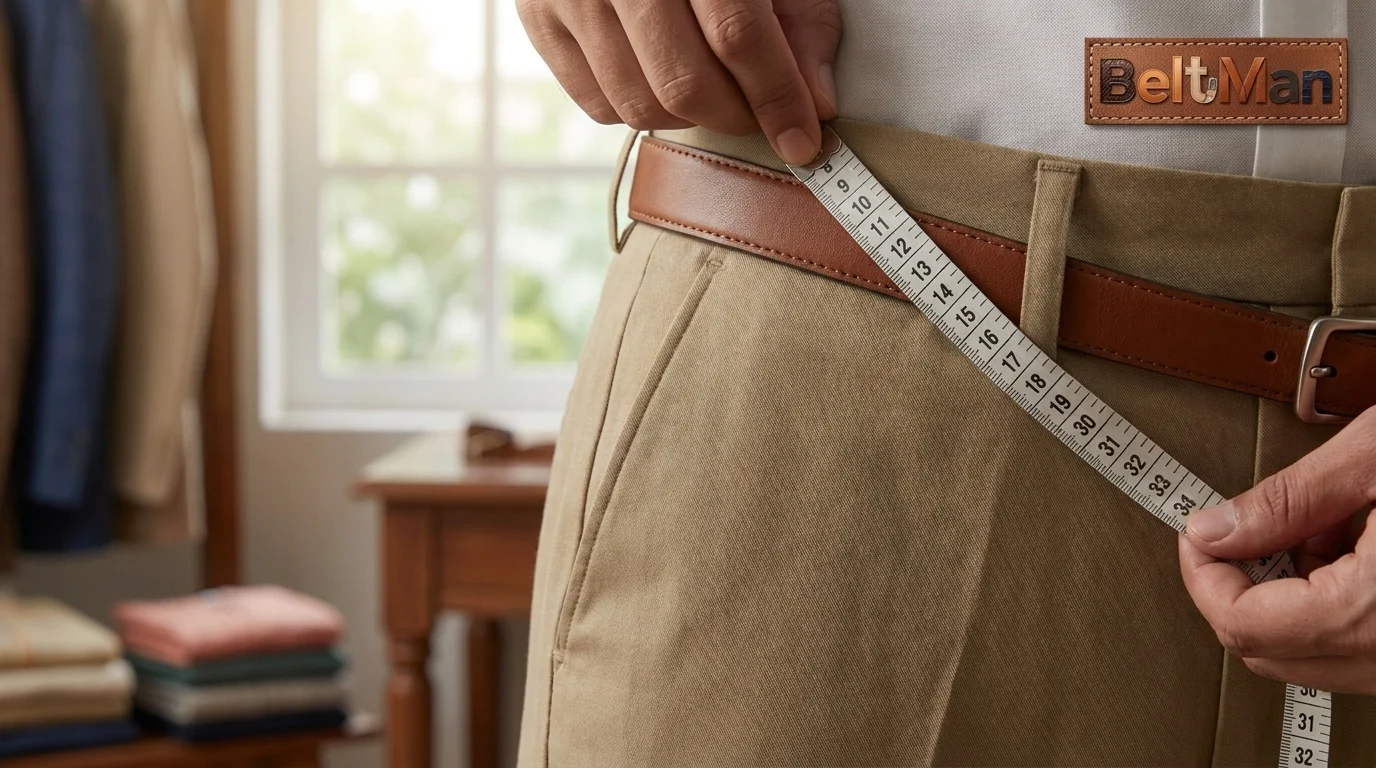
Women's belts are worn in more varied positions than men's — cinched at the natural waist over a dress, sat low on the hips with jeans, or looped through trouser belt loops the same way a men's belt is — and where it sits changes the required measurement more than it does for a standard trouser belt. Measure at the exact position you intend to wear it, using the same soft-tape method described above, rather than defaulting to a natural-waist measurement purely out of habit. There isn't a single reliable "add 2 inches" convention for women's belts the way there is for men's trouser belts, since so much depends on the specific garment it's being paired with on any given day — which is exactly why measuring at the actual position you'll wear it matters more here, not less, than it does for a standard men's trouser belt. As with the men's range, use that measurement to choose the closest standard size, rather than guessing between a generic small/medium/large band.
What If I'm Between Two Sizes?
Size up, without much hesitation either way.
A belt that's a little longer than strictly necessary is a minor inconvenience at most — a slightly longer tail of leather past the keeper loop, easily tucked away. A belt that's a little too short is an uncomfortable fit at best and a returned or exchanged order at worst. If your measurement falls exactly between two standard sizes, size up rather than down — an extra hole is simple to add wear into, while a belt that's genuinely too short isn't fixable at all.