Blog
5 Ways to Tell Pure Leather from Fake Leather

Most people can't tell the difference by looking — and a lot of labels are written to keep it that way. Here's what actually separates real leather from a convincing imitation, in tests you can run yourself in under a minute each.
Table of Contents
The Quick Answer
Real leather has an earthy smell, an irregular grain, and absorbs a drop of water. Fake leather smells like plastic, looks too uniform, and beads water on the surface.
Those three checks alone catch most fakes, even the increasingly convincing ones. The label is worth reading too, but it's the one place manufacturers can genuinely mislead you without technically lying — which is exactly where most people get caught out, and where the rest of this guide is most useful. None of these tests require special tools or expertise; they take under a minute each, and they work whether you're standing in a store deciding what to buy or checking something that just arrived at your door.
Way 1 — Read the Label, But Know What the Words Actually Mean
"Genuine leather" sounds like a compliment. In the leather trade, it's closer to a warning label.
Leather is sold in a tier system, and the names genuinely don't map to intuition the way you'd expect walking into a store. Full-grain is the top layer of the hide, left intact with its natural grain — the strongest, most durable option, and the only one that develops a real patina over years of wear rather than just wearing out. Top-grain is full-grain that's been lightly sanded for a more uniform, blemish-free look — still genuinely good leather, though slightly less durable and slower to develop character. "Genuine leather" — despite how reassuring it sounds — is typically the layers left over after the top grain is split away during processing, often sanded down and coated to look more finished than the underlying material actually is. Bonded leather sits below even that: scraps of leftover leather fiber glued to a fabric backing, the least durable of the options that can still honestly be called leather at all. Below all of these tiers entirely is PU, PVC, "pleather," or "vegan leather" — no animal hide anywhere in the product, just a plastic coating textured and embossed to visually resemble one.
The practical takeaway: if a label proudly says "genuine leather," that's not a red flag exactly — it is real leather, after all — but it's not the reassurance it sounds like either. Look specifically for the words "full-grain" or "top-grain" if durability and long-term wear are what you're actually paying extra for, and treat "genuine leather" on its own as a mid-tier claim rather than a premium one.
Way 2 — The Smell Test
Real leather smells like leather. Fake leather smells like a hardware store.
Genuine leather has a warm, slightly earthy smell that comes from the tanning process itself — it's one of the hardest things to fake convincingly, because it's a byproduct of an actual chemical process acting on real hide over time, not a texture that can simply be printed on. PU and PVC "leather," by contrast, often carry a faint chemical or plastic smell, more noticeable up close or when the material is brand new, though it can fade somewhat with age and airing out in a well-ventilated space. This test is quick, requires no tools at all, and it's usually the very first thing an experienced leather buyer does without even thinking about it — before touching or examining anything else about the piece.
Way 3 — The Touch & Grain Test
Real leather is irregular on purpose. Fake leather is suspiciously perfect.
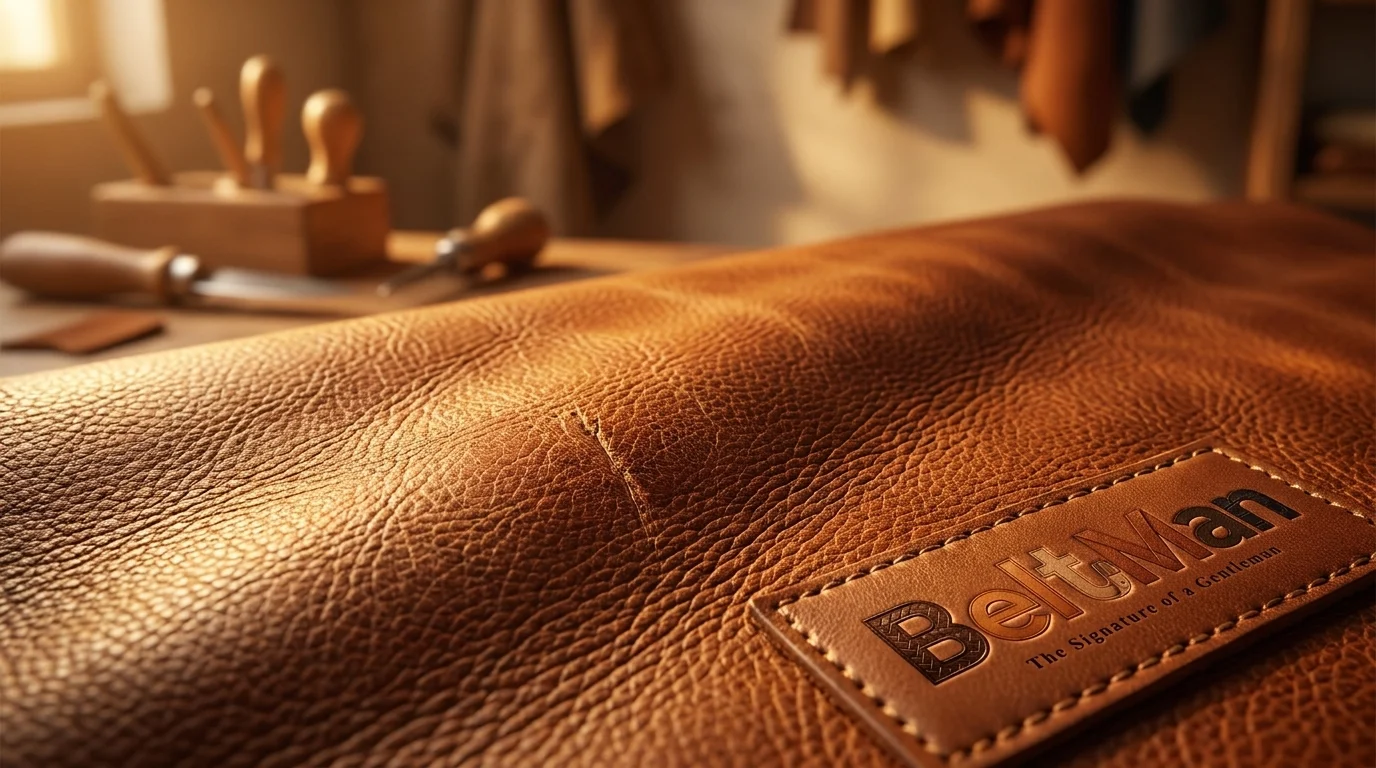
Look closely at the surface first. Genuine leather has a natural grain — small variations, the odd faint mark or wrinkle, pores that aren't perfectly spaced — because it came from an actual animal hide, and no two patches of hide are identical to each other. Synthetic leather is often printed or embossed with a repeating pattern that, up close, looks a little too even and regular, closer to wallpaper than skin. Then press it with a fingertip: real leather gives slightly under pressure and springs back without holding a hard crease, similar to how your own skin behaves when pressed. Fake leather tends to feel colder to the touch, noticeably stiffer, and either doesn't move much under pressure or creases sharply and permanently right where it's pressed.
Way 4 — The Water Drop Test
A drop of water tells you almost immediately what you're actually dealing with.
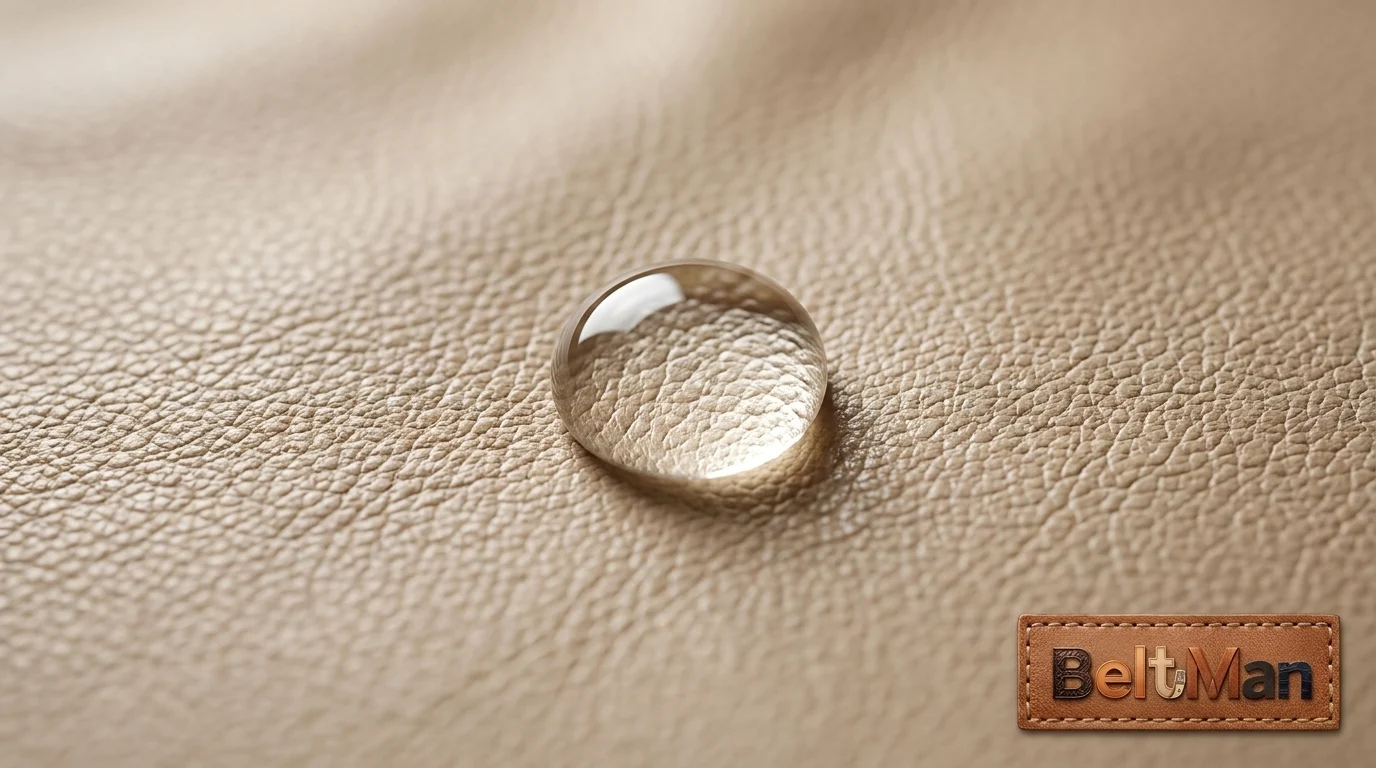
Leather is a natural, porous material, so an untreated drop of water will slowly absorb into real leather over a minute or two, leaving a faint, slightly darker mark where it soaked in. On PU or PVC material, water beads up and sits on the surface instead, since there's no porous fibrous structure underneath to draw it in — you'll usually see this difference within 30 seconds. This test is worth doing carefully and sparingly — one small drop in an inconspicuous spot, blotted dry promptly afterward — rather than as a routine habit, since repeated water exposure isn't good for leather generally, treated or not.
Way 5 — The Price Test
If the price doesn't cover the cost of real hide, tanning, and cutting, it probably isn't the material it claims to be.
Full-grain leather is genuinely expensive to produce — the hide itself, the tanning process, and the labor of cutting and finishing it by hand all cost real money, and there's no version of that supply chain that's cheap to run. If a "leather" belt is priced at a fraction of what comparable full-grain items cost elsewhere, that price is usually telling you something true about the material, regardless of what the label happens to say. This isn't a perfect test used on its own — some genuinely good deals exist — but paired with the smell and touch tests above, a price that seems too good to be true is a legitimate reason to look closer rather than assume you've simply found a bargain.
Bonus — Check the Back of the Material
If you can see the underside, it usually settles the question on its own.
Real leather looks like leather on both sides — rougher and less finished on the back than the front, but still clearly hide, with the same fibrous texture running through it. Fake leather often reveals a woven fabric or paper-like backing once you look underneath the surface coating, since the convincing "leather" look on top is really just a printed or embossed layer applied over something else entirely. This isn't always possible to check before buying, since the back of a finished belt or wallet is often stitched away from view, but it's one of the most reliable and immediate tests whenever you genuinely can get a look.
A Quick Note on "Vegan Leather"
"Vegan leather" is a newer, friendlier-sounding name for the same PU or PVC material — not a new invention or a technological breakthrough.
It's worth knowing this isn't a trick exactly — vegan leather is honestly marketed as not containing animal hide, which is straightforwardly true, and some buyers specifically want that for genuine ethical or dietary-style reasons. The confusion happens when the styling and marketing lean on the word "leather" hard enough that the "vegan" qualifier gets skimmed past by someone expecting the durability of the real thing. If avoiding animal products is the actual goal, vegan leather is a reasonable, honestly-labeled choice for that purpose. If durability and a developing patina over years are the goal, it won't behave like full-grain leather no matter how it's marketed or how convincing it looks on day one — and knowing that upfront avoids real disappointment a year or two in, once the coating starts to show its age. According to the Leather Working Group, an international body focused on responsible leather sourcing standards, genuine leather's actual environmental footprint depends heavily on tanning and sourcing practices specifically — meaning "vegan" and "sustainable" aren't automatically the same claim, in either direction, and shouldn't be assumed interchangeable.