Content Map (Table of Contents)
- H1: About Beltman — The Signature of a Gentleman
- H2: Why Beltman Exists
- H2: Founded in Kolkata, 2025
- H2: What We Believe
- H2: What We Check Before It Carries the Beltman Name
- H2: Where We're Based
- H2: Meet Sudipta Das
- H2: Frequently Asked Questions
- Image Strategy
- Internal Links
- AEO / GEO / SGE / Zero-Click Optimization Checklist
- Meta Tags & Revision Notes
About Beltman — The Signature of a Gentleman
Beltman brings pure leather belts and wallets for men to Kolkata and across India. Here's who we are, what we hold every belt to, and why it exists in the first place.
Why Beltman Exists
Two words on a label — "genuine leather" — have been allowed to mean almost nothing for years.
Walk into most stores and the belt on the shelf is labeled genuine leather, priced like it's premium, and is often quietly the second-lowest grade of real leather available — sometimes not leather at all once you check closely, whatever the tag claims. (→ 5 Ways to Tell Pure Leather from Fake Leather) covers exactly how to tell the difference, because most shoppers reasonably assume the word "genuine" is doing more work than it actually is.
That's not solving the problem it claims to solve; it's confident-sounding language doing the work that real material should be doing instead. Beltman was built to close that gap: full-grain leather, described honestly as exactly that rather than dressed up in softer language, chosen and checked before it carries the Beltman name. It's a narrower promise than most brands make, and a more specific one. It's also one that can be kept on every single order, because it doesn't depend on scale to work — it depends on being consistent about what "genuine" actually means, regardless of how many orders come in on a given day.
Founded in Kolkata, 2025
Beltman started as a straightforward idea: genuine full-grain leather belts and wallets, sold honestly — the standard described above, made concrete.
Beltman was founded in 2025 by Sudipta Das, based in Kolkata, West Bengal — a city with a genuine, longstanding leather-working tradition of its own. The brand exists to do one thing well: bring genuine full-grain leather belts and wallets for men to customers who'd otherwise have to guess at what "genuine leather" actually means on a label. Being a young brand rather than a decades-old one isn't something to talk around — it means Beltman is still small enough that a customer's feedback genuinely reaches the person making the decisions, rather than disappearing into a large organization several layers removed from anyone who can actually act on it.
What We Believe
Four things this brand won't compromise on, whether that makes production slower or pricier than the alternative.
- Real leather, always. Full-grain, not PU, not bonded — a belt that's actually leather all the way through, not a coating pretending to be one. If it can't honestly be called pure leather, it doesn't get sold under the Beltman name.
- Checked, not just labeled. We choose what carries the Beltman name based on what it actually is, not what a supplier's own label claims — the same scrutiny we'd want if we were the ones buying it.
- Prices that make sense. Not inflated numbers marked down to look generous, and not a race to the bottom that quietly swaps in cheaper materials. Prices that reflect what a genuine leather product actually costs.
- Based in Kolkata. A real store you can walk into and a real office behind it, not a warehouse with a returns address and nothing else.
What We Check Before It Carries the Beltman Name
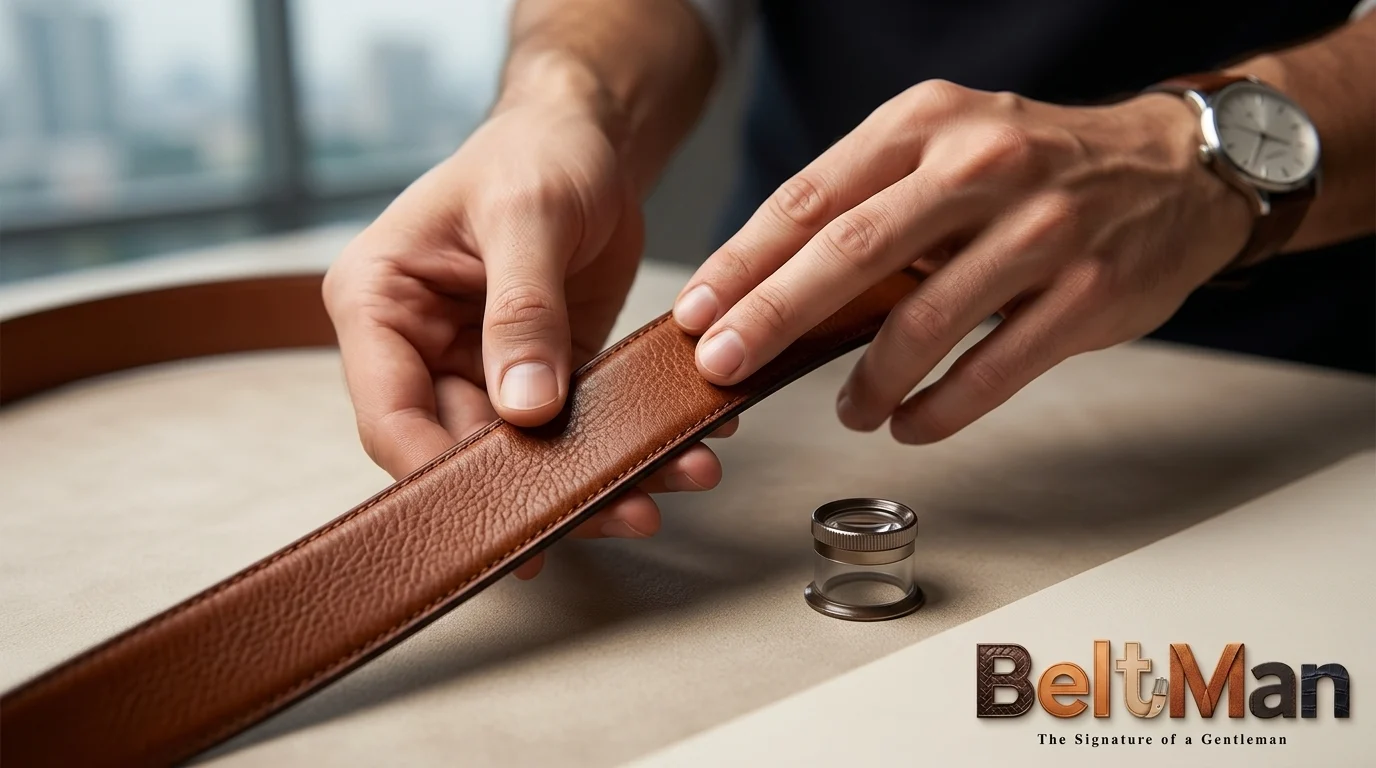
Four things determine whether a leather belt lasts ten years or ten months — the leather, the hardware, the stitching, and the finish — and we hold every belt to the same standard on all four.
- The leather is full-grain — the strongest layer of the hide, and the only kind that develops a genuine patina rather than cracking within a couple of years. Corrected-grain and PU leather are cheaper and more common, which is exactly why we check for the difference rather than taking a supplier's label at face value. (→ full breakdown: 5 Ways to Tell Pure Leather from Fake Leather)
- The hardware is solid metal, cast rather than stamped, so it holds its shape for years instead of denting at the first knock against a doorframe or car door.
- The stitching is reinforced with waxed thread at every stress point — the seam is usually the first place a cheap belt gives out, so it's the first thing we check.
- The finish is cleanly cut and burnished at the edges, not sealed with a lacquer coating that peels and cracks within a year of regular wear.
None of this is difficult to check for. It's just easy to skip when a belt is priced to move fast, and Beltman is built around not skipping it — a standard that applies the same way whether a belt is priced at ₹999 or higher, not just on the premium end of the range. (→ How to Care for Your Leather Belt So It Lasts 10+ Years)
Where We're Based
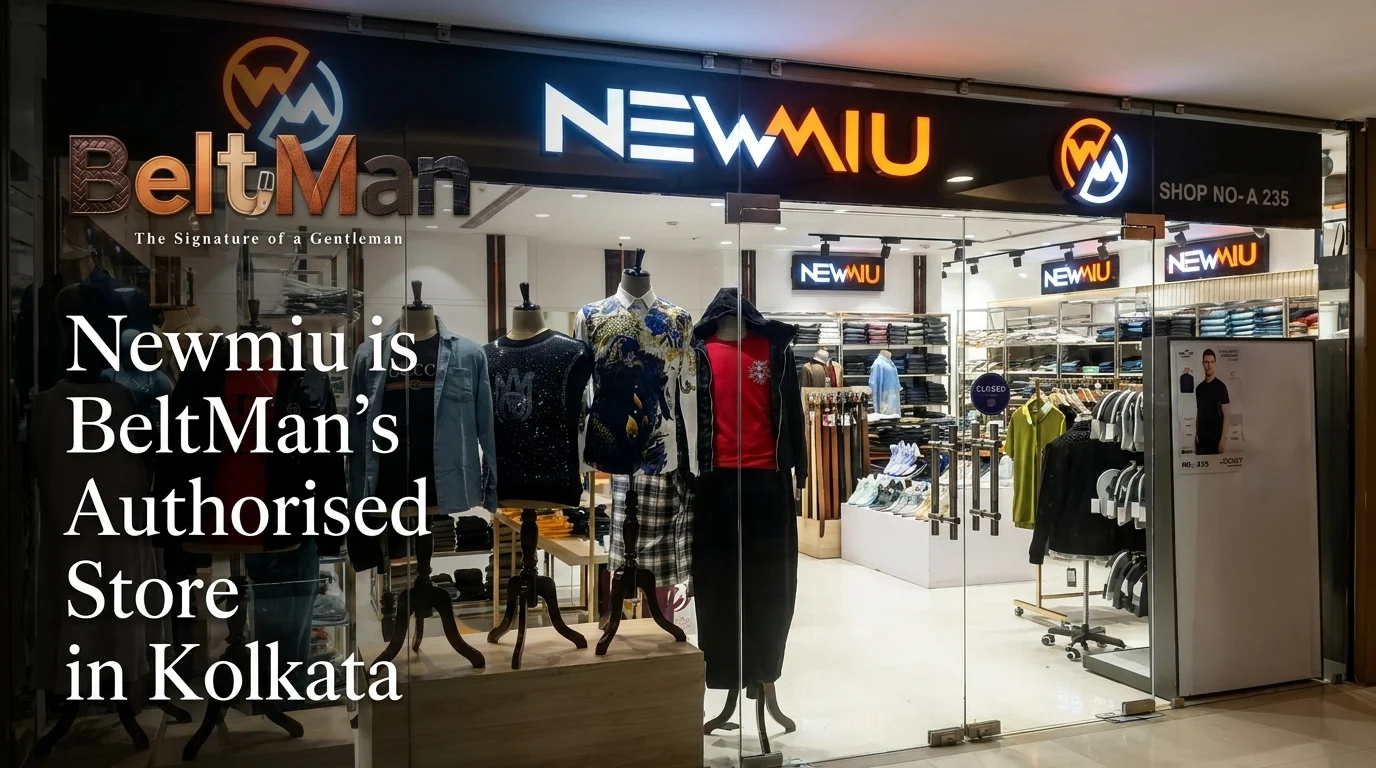
A real store you can walk into, and a real office behind it — not a warehouse with a returns address printed on the label.
The Beltman store is at Shop No. A-235, 2nd Floor, City Centre 2, Rajarhat, Kolkata — come in, feel the leather, try a belt on, and see the color and grain in person before deciding. Our office, where orders are handled and checked, is at 18, 1, Jessore Rd, Rathtala, Barasat, Kolkata 700124. Whether you buy in person at City Centre 2 or order online from another state entirely, it's the same team and the same standard behind both — geography changes how long delivery takes, not what you actually receive. (→ Contact Us) for directions and store hours.
Meet Sudipta Das

The name behind Beltman, and the person actually responsible for what a Beltman belt is and isn't.
Sudipta Das founded Beltman in 2025 and runs it directly out of Kolkata — not from behind a corporate title, but from the same city, and the same working relationship with the store and office that handle every order. The standard is a simple one: full-grain leather, checked and chosen honestly, priced at what it actually costs. It isn't a complicated philosophy, and it doesn't need to be — it just has to be followed on every single order, which is a far easier promise to keep at Beltman's current size than it would be at ten times the size, once sourcing and quality checks all start passing through more hands. That's the trade Sudipta made deliberately: a newer name in Kolkata's leather trade, competing against brands with decades more history, in exchange for a business small enough that a customer's message still reaches the person who can actually do something about it, not a support queue several layers removed from anyone with real authority to fix a problem.
Frequently Asked Questions
Who founded Beltman?
Sudipta Das, in 2025, based in Kolkata, West Bengal.
Is Beltman a manufacturer or a reseller?
Beltman is a trading company — we source genuine full-grain leather belts and wallets and check them against our own standard before they carry the Beltman name, rather than manufacturing them ourselves in-house.
Where are Beltman products sourced from?
India-based suppliers, consistent with Kolkata's own long leather-working tradition. Every item is checked against our full-grain standard before it's sold, regardless of where you buy it.
Does Beltman only sell online?
No — there's a physical store at City Centre 2, Rajarhat, alongside the website, and both draw from the same stock. (→ Contact Us)
How is Beltman different from bigger, established leather brands?
Mainly in scale and focus — Beltman is a new, small, single-category brand rather than a decades-old multi-category one, which means less brand history to point to, but a shorter distance between a customer's feedback and the person who can actually act on it.
What does "The Signature of a Gentleman" mean?
Less about how something looks, more about a specific kind of consistency — a belt holding up the same way in year five as it did in week one, a price meaning the same thing at checkout as it did on the page. That consistency is the "signature" the name points to: not a decoration, a standard that doesn't change depending on who's looking or what they're willing to accept.


